
History, told by the people who lived it.
Meet the historians of the past and travel from Babylon to the Cold War. One story, one takeaway, five minutes a day. For curious minds, no exams attached.

- 100
- stories at launch
- 20
- tracks
- 25
- free stories
- 5
- minutes each
History is the best story there is. It is rarely told like one.
Most of us met it as a list: dates to memorise, dynasties to keep straight, a test at the end. The stories underneath, the ambitious, frightened, brilliant people who made the past, got lost on the way to the exam.
-
Too long to start
A six-hundred-page book on Rome is wonderful and stays on the shelf. There is never a whole evening free.
-
Too dry to remember
A timeline is a spreadsheet. Nobody remembers a spreadsheet; everybody remembers a person in a tight spot.
-
Too scattered to add up
A documentary here, a podcast there. Without a map, the pieces never join into a picture of how the world got this way.
One story, one takeaway, five minutes.
History9 turns world history into short narrated stories, each presented by a historian from the past, and arranges them so they add up.
-
A historian tells it
Herodotus, Sima Qian, Ban Zhao, Ibn Khaldun and Anna Komnene present the stories: knowledgeable, warm, occasionally wry, and honest about what the evidence does and does not say.
-
A person, a moment, a date
Every story opens on someone in a particular place on a particular day, with the sensory detail that makes it stick, and unfamiliar terms explained in one sentence.
-
Why it mattered
Each story lands one clear takeaway about why that moment still shapes the world, and ends with a few quick questions that make it yours.
Five voices from five worlds.
The presenters are fictional likenesses of real historians, chosen so that no single region or century does all the talking.
-
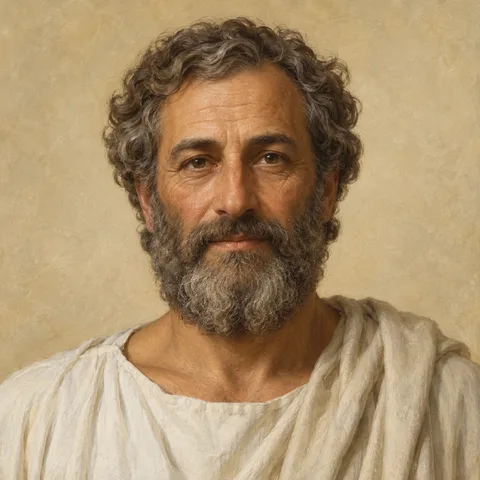
Herodotus
The Greek traveller of the fifth century BC who collected stories from Egypt to Persia and weighed them against each other.
-

Sima Qian
The Han court historian who chose to finish his record of China rather than die with his honour intact.
-

Ban Zhao
The Han scholar who completed her family's history of the dynasty and taught at the imperial court.
-
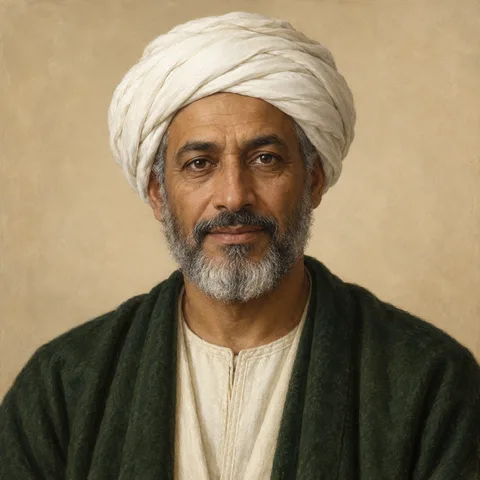
Ibn Khaldun
The fourteenth-century North African thinker who asked why dynasties rise and fall, and answered with a theory.
-

Anna Komnene
The Byzantine princess who wrote the history of her father's reign from inside the palace.
Ten areas, from the first cities to the Cold War.
The catalogue is arranged by area and track, so you can follow one thread, the Mongols say, or Rome, without sitting through everything in order.
-
Ancient World
- Cradle of CitiesFree track
- Life Along the Nile
- From Republic to Empire
-
Asian Empires
- The First Emperor and the Han
- Genghis Khan and the Steppe
-
The Americas
- The Maya and the AztecsFree track
- Cortes, Pizarro and the Fall of Two Empires
-
Africa and the Islamic World
- Baghdad's Golden Age
- Mali and the Sahara Trade
-
Medieval Europe
- Charlemagne, Vikings and 1066Free track
- The Black Death
-
Early Modern Europe
- Florence and the Medici
-
Revolutions
- Copernicus to NewtonFree track
- From the Bastille to Waterloo
-
The Modern World
- Hitler to Hiroshima
- The Cold War
-
History of Ideas and Science
- The Axial AgeFree track
- Life and the Body
-
Everyday Life Through the Ages
- What People Ate
- Coins, Banks and Bubbles
Five tracks are free. One opening track in each of five areas, twenty-five stories, the whole starting experience at no cost. New tracks are added as the catalogue grows.
Start free. Pay for the rest by the month, the year or the seat.
The free tracks cost nothing. Past them there is one flat price for a person and one price per seat for a group, in US dollars.
- Free
- Five opening tracks, twenty-five stories.
- $29.99 a year
- Every area and every track, for one person, billed once a year.
- $24.00 per seat, a year
- Per seat for a class, a club or a team, with an invite link and a web dashboard.
Before you ask
How long is a story?
Do I need any background in history?
Are the historians real?
Is it for children?
Does it work on a phone?
What does it cost?
Your first story is waiting.
Open the app, pick an area, and let a historian take it from there. The free tracks need no card and no account to begin.
Start freeWeb, iPhone and Android. Your progress follows you.